Archive for the ‘Photography’ Category

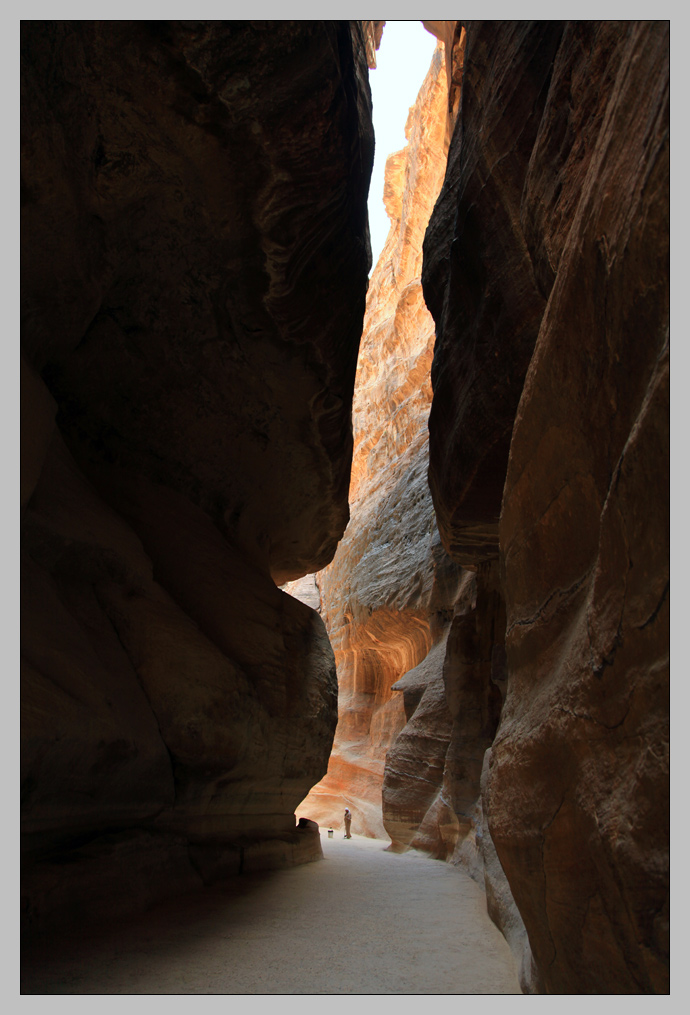
The Siq

Posted by Arlo on Jan 18, 2012 under Photography, Postcard Valet, Travel

The Siq

Purchase a Print or
Download Wallpaper: 1920×1200.

The third Indiana Jones movie, The Last Crusade, made the ruins of Petra, in the Kingdom of Jordan, famous.  I’ll admit that the imagery in that movie – namely the huge architectural façade carved out of the face of a sandstone cliff – inspired me to travel there when we found ourselves in the Middle East.

While Petra’s Treasury (or “Al Khazneh,” as it’s known in Arabic) is the most famous monument in the park, I actually found other parts to be more interesting.  The colors of the rock inside the Urn Tomb were much brighter and had intricate veins throughout, while the biggest and most impressive rock-cut temple, the Monestary, stood at the top of a long stone staircase that rivals anything on the Inca Trail.  The Siq, though… The Siq was my favorite part of Petra.

“Siq” is an Arabic word meaning “shaft,” and what an impressive shaft it is!  Beginning at roughly the entrance to the park, it winds gently downward almost a full mile before opening directly in front of the Treasury.  Except for perhaps an hour or two during midday, the sun never touches the bottom and while the rocky walls towering above you are aglow with sunlight, the floor is below is nice and cool.

The walls of the Siq were pulled apart by geologic activity and the lower sections have been worn smooth by countless flash floods.  Part of the restoration of Petra was building a new dam to hold the waters back.  Without the dam, the Siq would be a very dangerous place to be during one of the rare rainy days in that part of Jordan.

Taking a good photo in this natural canyon is more difficult than you might imagine.  During the day, the sky and upper walls are incredibly bright while the bottom lies in shadow.  Expose for the lower walls and the top will be totally blown out.  During the golden hours of sunrise and sunset, the sun is at such an extreme angle that it barely illuminates the edges of the cliffs 600 feet above your head.  Without illumination, those rich golden colors in the wall seem dull and grey.  Sunrise and sunset are usually the best times to take pictures of landscapes, but canyons only benefit from that soft lighting when they’re running exactly east-to-west.

Looking over my Siq photos, I found a few with compositions that I really liked, where the wall’s curves snaked through the photo’s third lines and created interesting shapes with light and shadow.  Unfortunately, the best of those had the sun directly overhead, rendering the floor of the Siq as nothing more than a hard white line.  The sky is blown out in this photo, but it’s such a small element of the overall composition that it doesn’t even matter.  The walls are beautiful, just as I remember them.  I love the lone janitor with his bucket, too, about to go around the corner.  Without him, we wouldn’t have the proper sense of scale.

Canon 5D Mark II
Date: 11:34am, 3 August 2011
Focal Length: 24mm
Shutter: 1/50 sec
Aperture: F/4
Exposure: -1.3 step
Flash: No
ISO: 100
Photoshop: Auto levels, minor saturation increase

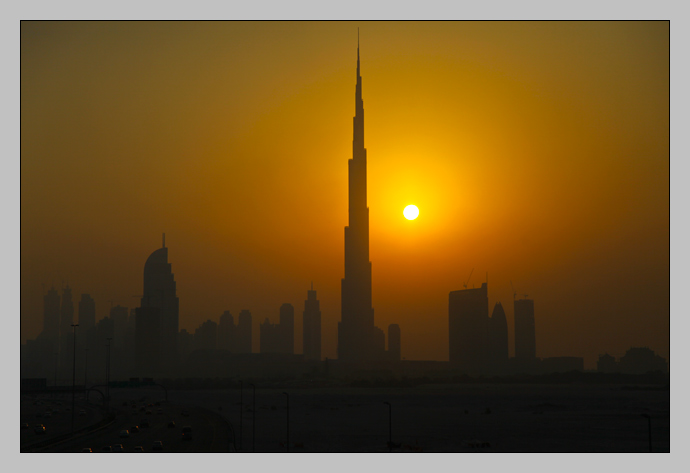
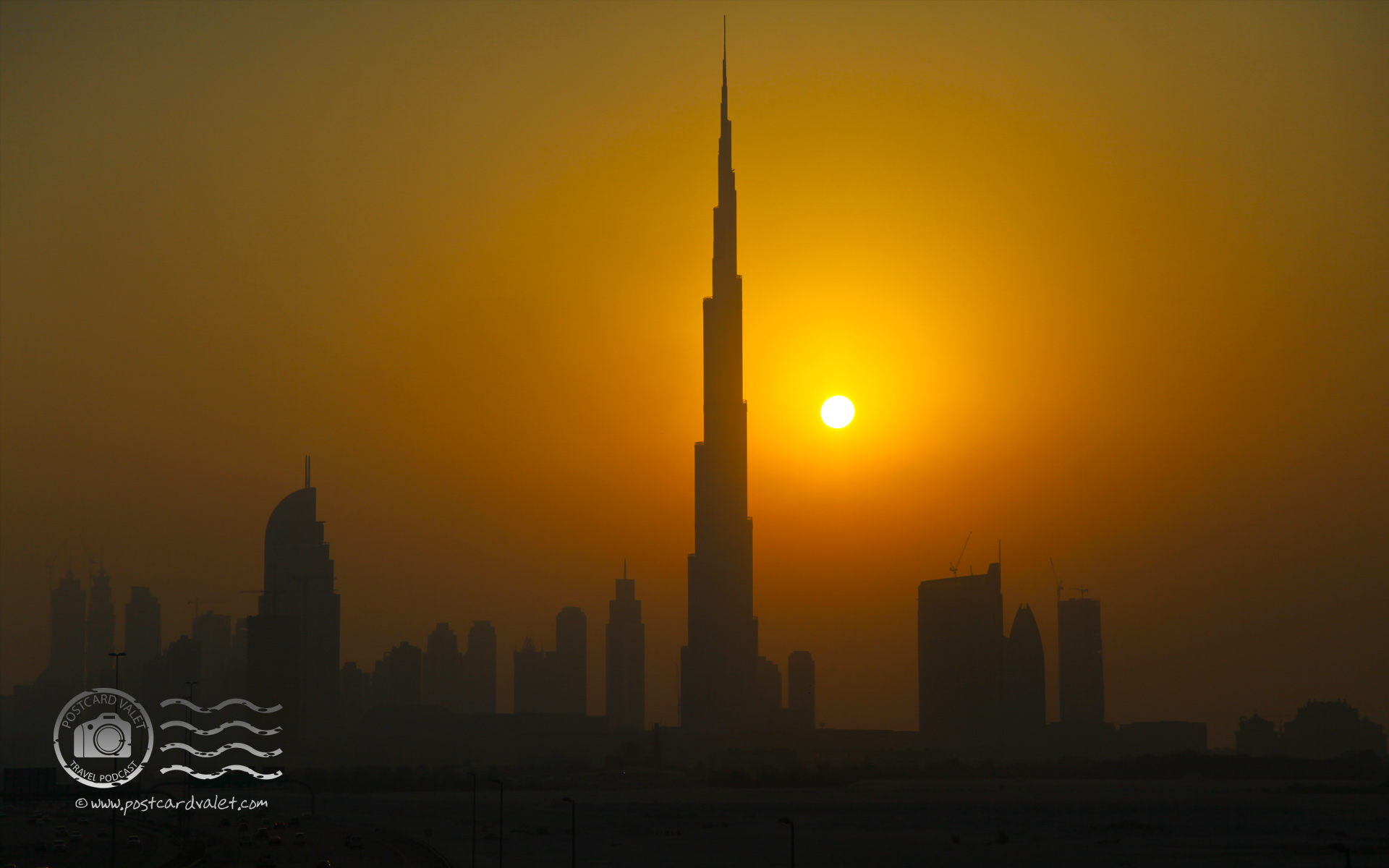
The Burj Khalifa

Posted by Arlo on Jan 6, 2012 under Photography, Postcard Valet, Travel

The World's Tallest Building, the Burj Khalifa

Purchase a Print or
Download Wallpaper: 1920×1200.

We only had one day in Dubai, a 17-hour layover between Moscow and Bangkok.  Oksana and I left our bags at the airport and spent the day in the city.  We explored Dubai’s insane malls, giant hypermarkets, went skiing indoors, and tried (but failed) to ascend the world’s tallest building, the Burj Khalifa.

Late in the afternoon, we decided to give the Big Bus Tours company a try.  They run a “hop on, hop off” bus that we, despite the sky-high price they were asking, thought would be a good way to see the city sights.  It wasn’t.  They happily sold us two tickets (for a total of $120 US dollars!) at 3:30pm, failing to mention their buses only run until 5pm.

We chose our seats on the second level of the open-air, double-decker bus and put in our earphones so we could hear the guided audio tour.  We both pulled our cameras out of our bags at the same time and, to our horror (and shame, because we should have known better as Alaskans), watched every glass surface on them instantly fog.  Not only had our cameras been inside a cool, air conditioned mall for the last few hours, they’d also been with us when we went skiing.  By pulling them out of our bags, we’d effectively raised their temperature almost 70 degrees less than 5 seconds.

The air in Dubai is surprisingly humid and after half an hour of frustration, I worried that the inner elements of my lens would never defrost.  Our first few photos were ridiculously blurry.  Finally, by the time we pulled up to the third or fourth gigantic mall on the bus’s loop, the sun had done its job.  My camera was ready to take some pictures again.

When the bus pulled out again, we were the only ones left on the top level.  After 5 minutes or so, we realized that the guided tour was no longer playing through our headphones…

We forgot our worries when the bus pulled onto the highway.  There, in the distance, was the Dubai skyline with the sun sinking into the humid haze behind it.  Oksana and I moved to the opposite side of the bus, leaned over the rail, and tried to frame a photo – any photo – without a telephone pole or an electrical wire in it.

Of the dozens we shot, the one you see above is my favorite.

When we sat back down, we knew something was wrong.  No audio guide and we were moving further and further from the city.  Neither Oksana nor I wanted to go down and ask the driver if we’d stupidly missed the last stop, but of course, eventually we had to.  I walked down when he pulled off at a gas station – the lower half of the bus was also empty – and caught up to him at the pump.

“Um, is the tour over?” I asked.

He looked at me, shocked. “You were on the bus?”

“Yes, upstairs.”

“The tour ended at five! You were not supposed to stay!” He sighed. “Where did you planning to go?” His English wasn’t perfect.

I gave him the name of the mall where we bought the tickets because I knew it had a metro station nearby that would lead us to the airport.  He drove us back as soon as he finished filling up the tank.

I felt guilty, but hey, he should have checked his own bus at the last stop, right?  There was even a security camera on the upper deck, pointed right at us!

Canon 5D Mark II
Date: 5:38pm, 30 September 2011
Focal Length: 82mm
Shutter: 1/8000 sec
Aperture: F/4
Exposure: -1 step
Flash: No
ISO: 100
Photoshop: Minor rotate and crop, Slight crushing of blacks with Levels

Read the rest of this entry »

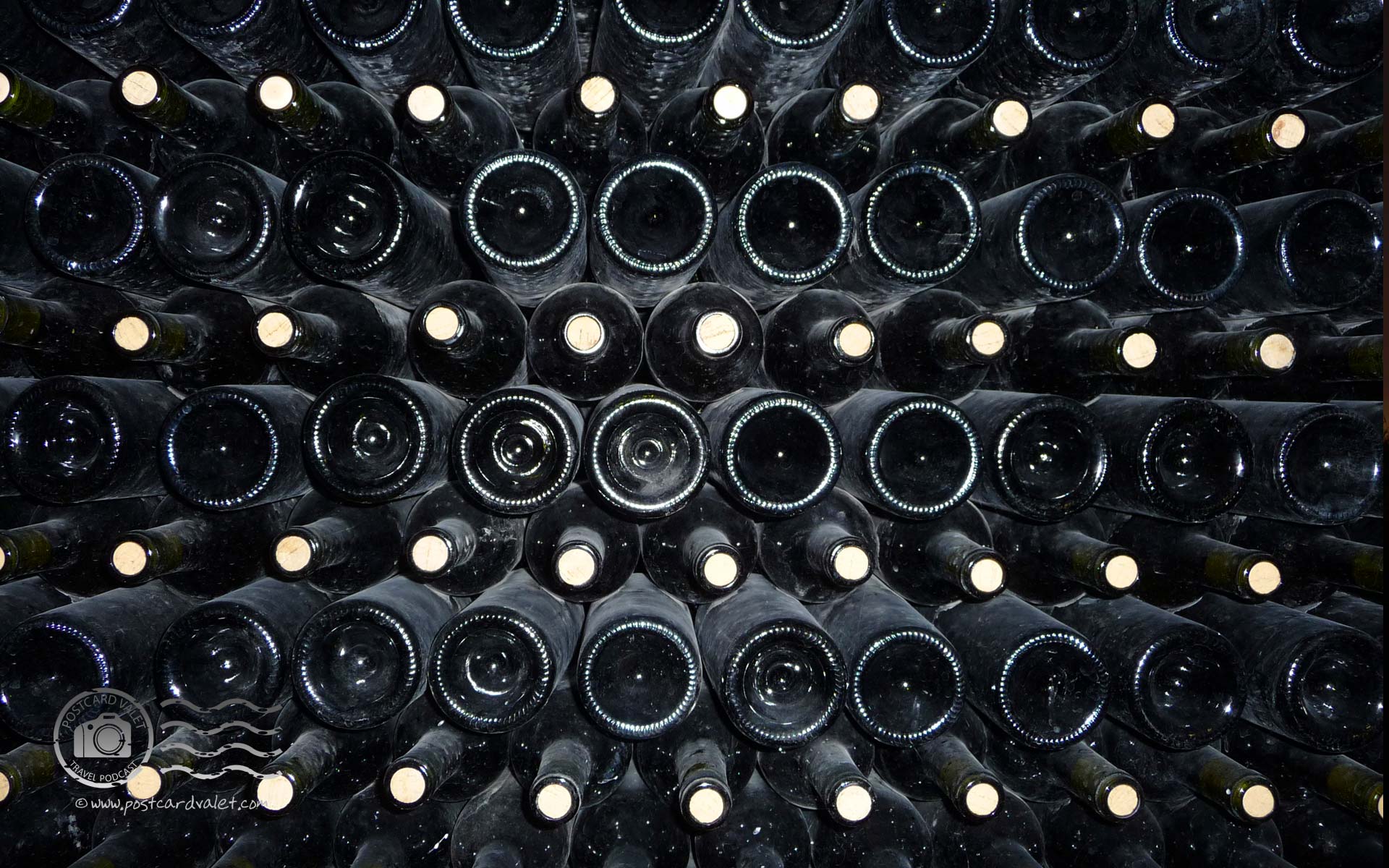
Wall of Wine

Posted by Arlo on Apr 15, 2011 under Photography, Postcard Valet, Travel

Purchase a Print or
Download Wallpaper: 1920×1200 or 1600×1200

Mendoza, Argentina is wine country.  The sunny weather is predictable and a plentiful supply of water comes trickling down from the back side of the Andes.  Obviously, the thing to do while you’re in Mendoza is to visit the vineyards.  The touristy thing to do is much the same, just on a bicycle.

Five of us set off one morning with a plan to try the touristy thing.  We rented bikes from Mr. Hugo and started pedaling our way to the first of 10-or-so wineries, olive farms, and chocolatiers.  What could have been a dangerous ride back was actually rather sober, as many of the vineyards were closed that day and, what’s more, we couldn’t justify 15-peso samples at every bodega we visited.

I’m not sure the bike ride thing worked for me.  The first time Oksana and I were in Mendoza, we simply found a bodega we liked (Tempus Alba) and spent a long, quiet afternoon on their veranda sampling all seven of their wines.  The travel time involved with the bikes, pedaling in the sun from vineyard to vineyard, made the whole day seem rushed.  That’s not to say we didn’t have a good time, however.

At Vistandes, we paid for a combination tour and tasting.  Our English-speaking tour guide generously moved us past the large steel fermenting vats and dark cellars full of oaken casks rather quickly so that we could spend more time sampling their wines.

While speeding along one plain hallway, we passed a low wall of wine bottles.  I didn’t hear what our guide said about it – no doubt something about the stack being another step in the aging process – because she didn’t even slow down as she passed it by.  I stopped long enough to frame two shots with Oksana’s point-and-shoot before I had to catch up with the group.  Both turned out well, but I like this one better because of the way the bottles go to the end of the frame, the curvature of the wide-angle lens bows them out a little, and, well, just the way that tilt of the photo makes the whole thing a bit more abstract.

Panasonic DMC-TZ5
Date: 3:03pm, 7 March 2011
Focal Length: 5mm (30mm equivalent)
Shutter: 1/30 sec
Aperture: F/3.4
Flash: Yes
ISO: 100
Photoshop: None

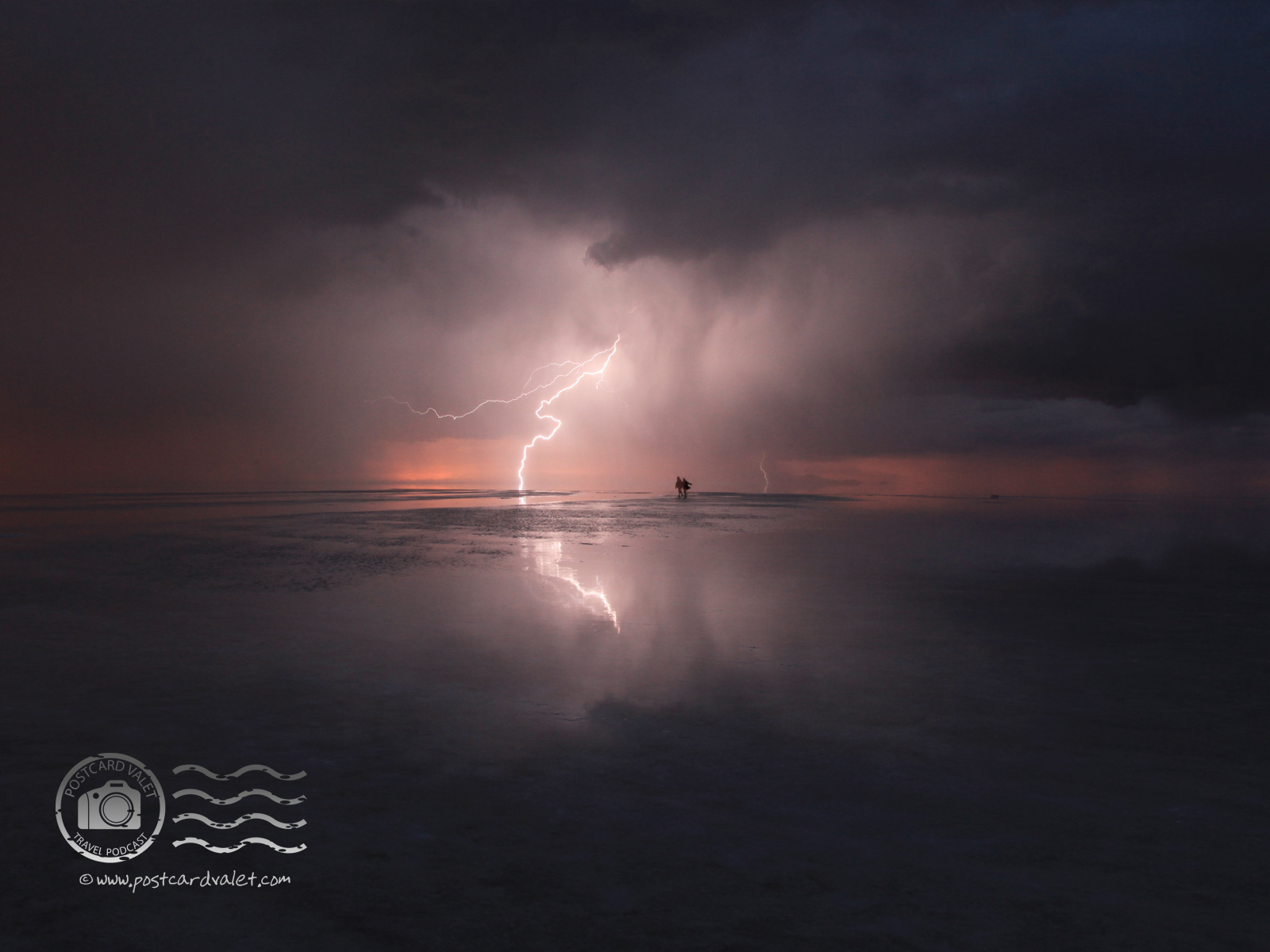
Tormenta de Uyuni

Posted by Arlo on Feb 26, 2011 under Photography, Postcard Valet, Travel

Purchase a Print or
Download Wallpaper: 1920×1200 or 1600×1200

What a difference three weeks can make!

After getting sick on our first visit to the world’s largest salt flat, Oksana and I retreated to La Paz and rested up.  We knew we were coming back to the Salar de Uyuni on our way down to Chile, but we worried that the trip wouldn’t be the same without our friends, Dusty and Wendy, along (not to mention that we couldn’t afford a “private” tour without them…)

So, when we arrived at Red Planet Expeditions again, we had plenty of questions for the guides.  The most important of which: How can we see the Salar at night?

The short answer: “You can’t.”  At least not without staying at a $100/night salt hotel.  When pressed, one of the guides admitted there were other options. We could pay $150 for a private, one-day tour which would let us stay out on the flats until about 10pm.  That seemed steep to us, considering the 3-day tour to Chile would still cost us $130.  Another option, he said, would be to try to convince a group to change the normal itinerary on their 3-day/2-night tour to stay out on the flats until just after sunset.  In that case, everyone would have to spend the night in Uyuni again, because there would be no time to drive south after dark.

Most of the tourists with reservations wouldn’t arrive until the next morning, so we resolved to return to the office early to meet them and pitch our idea before committing our own money.

The next morning, nothing went as planned!  The buses from Sucre and La Paz were late (due to the unpredictable road conditions during the rainy season.)  At first, this seemed like a great thing:  The later we got underway, the more likely it seemed we’d be able to convince our guide to stay on the salt flats until dark.  But as time went on and no word from the buses materialized, plans changed.  Oscar, a Red Planet guide, decided to simply merge the people who were waiting, even though not all of us had paid for the same tour.  “Don’t worry,” he told me. “I’ll just tell the others that we’re staying until sunset and they won’t even know that’s not normal!”

Indeed, after hearing that the normal tour only allocated a couple mid-day hours on the flats, the two couples from Argentina and France recognized the opportunity for what it was.  Sunset and star photos on the world’s largest salt flats?  And we don’t miss anything else on the tour?  How did we get so lucky?

Ever since I’d first heard about this tour in Quito, I’d been looking forward to getting some nighttime, starlight photos on the salt flats.  Supposedly, when the stars are reflected in the water below, it looks like you’re floating in space!  The weather on our second tour was cooperating, too.  On our first trip, it rained off and on the whole day, but this time, the sky was blue overhead and the only clouds were on the horizon.  Another difference: the water level on the flats was much higher on our second go-around.  We were excited that the mirrored surface was even better, even though that meant there were very few places where we could attempt the funny perspective shots…

As the sun began to set, a storm developed on the western horizon.  Big black sheets of rain began to fall, far in the distance, and the few people remaining on the flats began to cluster together and start taking photos.  As the storm approached, the lightning grew more intense.  Some of us were actually able to take handheld lightning photos if we were quick enough.

But as the night began to fall, the real show began!  With the darkness, I was able to lengthen my exposures.  I set my camera to shoot in bursts, bracketing all three shots to be slightly darker than normal.  The storm was raging by the end (though we never did get rained on!) and practically every photo captured at least one, big lightning bolt.

Everyone in our group has amazing photos from that evening, but this one is my favorite.

By 7:30pm, the air was whipping around us and I suspect the wind chill was below zero.  I was still in shorts and up to my ankles in icy salt water, shivering uncontrollably.  The storm had literally horseshoed around us and lightning was coming down on all three sides, but I continued to take photos right up until Oscar arrived with our Land Cruiser.  “I’m so sorry, man,” he shouted over the wind, “but I don’t think you’re going to get your starlight photos tonight.”

“Are you kidding me?  After a show like that?  I couldn’t care less!”

Canon 5D Mark II
Date: 7:20pm, 23 February 2011
Focal Length: 24mm
Shutter: 8 seconds, -1.7 step bias
Aperture: F/11
ISO: 500
Photoshop: Slight crop to level horizon, auto color, minor saturation increase, cloned out a couple dozen “hot” pixels (chip temperature errors), plus cleaned up the ghosting of one person’s silhouette (because they moved during 8 sec exposure.)

Salar de Uyuni

Posted by Arlo on Feb 4, 2011 under Photography, Postcard Valet, Travel

Purchase a Print or
Download Wallpaper: 1920×1200 or 1600×1200

The Salar de Uyuni has to be one of the most surreal places I have ever been.  Situated high in the Andes, it’s the world’s largest salt flat.  In over 12,000 square kilometers, the elevation varies by less than one meter and the tricks that plays on perspective almost have to be seen to be believed.

We’d raced through Peru to get to the Salar de Uyuni by early February because we’d heard that the best time to visit it was in the rainy season, during a new moon.  This time of year, during the day, water covers the salt flat and reflects the sky, and on a moonless night, the reflection of the stars – supposedly – creates a universe both above and below your feet.

We had also been planning to meet our friends, Dusty and Wendy from Roamthepla.net, at Uyuni since we’d hung out with them in Lima.

Everything was going well the night before.  After much debate, we’d booked a 3-day/ 2-night private tour with the Red Planet tour agency.  We were happy to pay a little extra for the two unused seats in our Land Rover (and pay a little bit less for a Spanish-only guide.)  Come the morning of our visit to the Salar, however, things started going downhill.

Both Oksana and I woke up sick.  If it had been only us, we’d probably have cancelled our tour, but we wanted to hang out with Dusty and Wendy, so we decided to soldier on.

And boy are we glad we did!  We drove onto the Salar in the Land Rover at about 5 miles an hour, pushing 10 inches of water out away from us in every direction. Our guide, Roy, stopped at the first dry island so we could take pictures, but one of the many passing showers caught up to us before we really got started.  We piled back into the SUV and he drove us to the Salt Hotel, farther out on the flats.

From the hotel, you could barely see the horizon in any direction.  Miles and miles of salt was covered by just a few inches of water which created floating mirages out of the mountains in the distance.  Aim your camera towards wet ground and your subjects appeared to be walking on the sky.  Point it at one of the few dry spots and the lack of perspective lent itself to hundreds of humorous opportunities to play with scale (for instance, a person standing 25 meters behind another might appear to be perched on their shoulder.)

Unfortunately, it felt like Oksana and I spent half our time on the flats doubled over with stomach cramps and while I took a few good photos, I wasn’t feeling especially creative with the camera.  We decided over lunch that we would cut our tour short and just go back to the hotel and sleep.  Our biggest regret: Bailing on our friends.

(Three days later, we’re feeling much better.  We’re about to catch a train back north into Bolivia, but I expect we’ll return in a couple weeks, because the agency we used has an easy option for border transfers into Chile and that seems like a fine place to go next!  Maybe next time we’ll find a way to get those night shots!)

Canon 5D Mark II
Date: 1:51pm, 02 February 2011
Focal Length: 105mm
Shutter: 1/1600 second, -.7 step bias
Aperture: F/8
ISO: 100
Photoshop: Slight crop to level horizon, auto color, minor saturation increase, desaturated SUV after auto color tinted it green.

Because I was well aware of how our sudden sickness was affecting the mood of our Salar de Uyuni tour, I asked Wendy and Dusty to help us stage a photo so we could all remember how our day together felt:

2011 Galapagos Wildlife Calendars

Posted by Arlo on Jan 5, 2011 under Photography, Postcard Valet, Travel, Website

Galapagos Calendar Preview

One of these days, I should probably try to put into words my philosophy about making money off our Postcard Valet web site.  In a nutshell, we want everything we have to offer – photos, videos, writing – to be free for you to enjoy… but more money means more traveling, and that’s important to us, too!

It would be easy enough to put up some Google ads or to explore other set-it-and-forget-it revenue streams on the site, but I hate how banner ads destroy the aesthetic.  Besides, when I visit other sites, I tend to completely ignore all the ads, anyway.  Don’t you?

The best solution, in my mind, is to create something special that you’d want to spend your hard-earned money on.  For example, we haven’t really pushed it, but we already have a link to our Smugmug gallery where you can purchase a print of any one of the photographs posted under the “photography” category on Postcard Valet.  And today we’d like to present you with our first published product: A 2011 Galapagos Wildlife Calendar!  (Actually, there are two of them!)

2011 Galapagos Calendar Cover (Premium) 2011 Galapagos Calendar Cover (Standard)

Visit our Lulu storefront to purchase one of these calendars!

The premium version of our calendar is printed on glossy white paper, is 13.5″ wide by 19″ tall, and has a coil binding.  It’ll run you $29.79, which puts exactly $5 in our pockets.

The standard version is a little bit smaller at 8.5” by 11”, but costs only $18.79.  Buying it, too, will give us five more dollars to travel on.

If we to sell 20 of these, we’ll be able to add another day of travel to our trip!

I’ve dealt with Lulu, the self-publishing site, before and the quality of their products is superb.  You can order directly from them and have one of these calendars for your own in just a few days.

I put a lot of effort into making this a product that I would want to own.  Hopefully, after you see them on our Lulu storefront, you’ll want to own one, too!

Galapagos Hawk

Posted by Arlo on Dec 17, 2010 under Photography, Postcard Valet, Travel

Galapagos Hawk

Purchase a Print or
Download Wallpaper: 1920×1200 or 1600×1200

We were walking back from a “power hike” up over the flooded crater called Darwin’s Lake on Isabela Island.  The plan was to get back to the pangas for a quick ride around the outer coastline before the captain picked us up with the Evolution for a brief whale watching trip before sunset.  We were sort of in a hurry, spread out along the trail.

A few meters in front of me, someone looked up and said, “Oh!  Wow!”  There, perched on a branch directly over the trail, was a Galapagos Hawk.  He was on the lowest set of branches, low enough that you could reach up and ruffle his feathers.  In fact, he was so low, I have no idea how the first few people in our group, including our naturalist guide, managed to miss him!

The rest of us, of course, clustered around the hawk and started taking pictures.  At first, we moved slowly and stayed a comfortable distance away from him, but then, as it became apparent that he wouldn’t fly away, we stepped closer.  Eventually, we were all arrayed almost directly underneath him.

If a hawk can be said to have a personality, I would label this one “curious.”  As we aimed our lenses at him and clicked away, he peered down at us, rotating his head this way and that.  Toward the end of the encounter, I stood directly underneath him with the long barrel of my lens practically up against his talons.  He never seemed bothered, never even flinched.  I would swear that he was as interested in me as I was in him.

When people ask why the Galapagos is so special, I think of moments like this.  There’s no other place on the planet where the wildlife are so comfortable around human beings.  It’s not just the hawks; it’s the sea lions, the iguanas, the birds, and the tortoises.  In the Galapagos, anyone can be a wildlife photographer and some of their best shots will come from a wide-angle lens!

Canon 5D Mark II
Date: 4:55pm, 25 November 2010
Focal Length: 105mm
Shutter: 1/1250 second
Aperture: F/4
ISO: 100
Photoshop: Slight crop, Auto color, dodged shadows very slightly, increased saturation very slightly.

Galapagos Hawk and its photographers